 7 July 2026
Every historic document, manuscript, or book has its own story: who read it, where it was kept, and what marks were left behind by their owners. With this knowledge, we can better understand our cultural past and its place in Europe, more easily distinguish facts from myths, and become more resilient to misinformation. The public learns about these stories through the activities of cultural organizations, including library exhibitions, educational programs, and publications, in which experts transform complex data into easily understandable narratives.
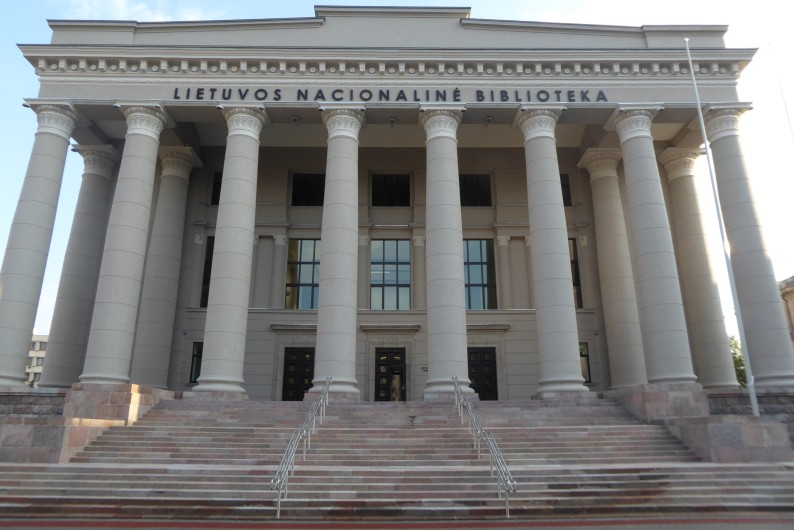
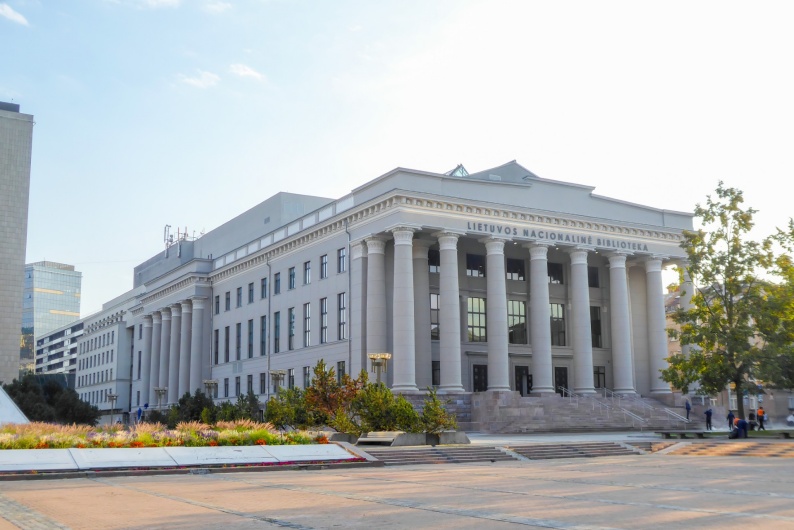
The Martynas Mažvydas National Library of Lithuania has become an associate member of the Consortium of European Research Libraries (CERL). CERL brings together European research libraries that preserve and study collections of early printed books, manuscripts, and documentary heritage. CERL’s data is used by researchers, conservators, and librarians, who can accurately determine the origin of documents and share this information with the public.
“Old documents help us understand who we are and where we come from. Today, this is particularly important for strengthening the nation’s resilience: by knowing our true history, we can maintain a strong connection to the past and critically evaluate current events. Our status as a special member of the consortium confirms that the work of the National Library of Lithuania in the field of documentary heritage is significant for the entire European research community,” said Aušrinė Žilinskienė, Director General of the Martynas Mažvydas National Library of Lithuania.
Cultural historian, Director of the Lithuanian Institute of History, and Associate Professor at Vilnius University, Dr. Aurimas Švedas, emphasized in a presentation delivered at the Baltic National Libraries Forum “LiLaEst 2026” that today the past, present, and future often “drift apart”—their connection becomes unclear. Constant informational noise distances people from forging these connections, as well as from their national identity. According to the scholar, this weakens society’s resilience to political, ideological, or commercial manipulation.
In such circumstances, the role of national libraries becomes particularly significant—they not only preserve authentic historical sources but also help the public navigate their complex interpretations.
The National Library collects and preserves one of the largest collections of documentary heritage in Lithuania: more than 2.5 million published documents, about 90,000 old prints, over 100,000 manuscripts and archival documents, and a collection of 151 parchments. Among them are the oldest Lithuanian-language parchment from 1465, the oldest Lithuanian book in the National Library—Jonas Bretkūnas’ Postilė (1591), books from the royal library of Sigismund Augustus, as well as Hartmann Scedel’s famous chronicle Liber chronicarum (1493), which contains the first written description of Lithuania.
Such documents provide insight into the formation of Lithuanian statehood, and the reliably established provenance of these materials also serves as a tool for combating disinformation. Membership in CERL strengthens both research on these collections and their accessibility to the international community.
We invite you to read the article published on the CERL blog about the library’s history and collections.