 19 August 2026
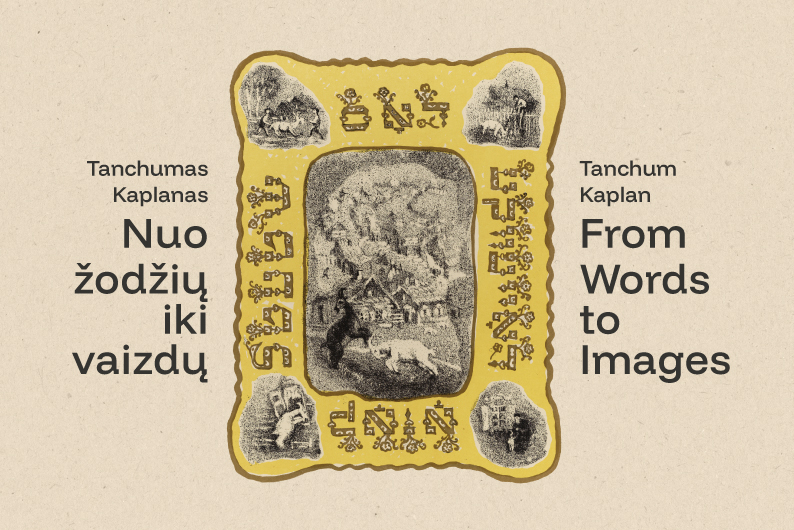
On 4 September at 5.00 pm, the opening of the exhibition ‘Tanchum Kaplan: From Words to Images’ will take place at the Martynas Mažvydas National Library of Lithuania (atrium, 3rd floor). This event will mark the European Days of Jewish Culture.
The exhibition presents the work of the Litvak artist Tanchum ben Levi Kaplan (1902–1980), also known as Anatoly Kaplan. A central theme in Kaplan’s work is the Jewish world of small towns – the shtetls – much of which was destroyed during the Holocaust. In his colourful and expressive lithographs, the characters of Sholem Aleichem, a classic of Yiddish literature, come to life, alongside motifs from folk songs, scenes from everyday life and traditions.
The exhibition offers a rare opportunity to discover an artist who was virtually the only painter in the Soviet Union permitted to consistently explore Jewish themes and preserve the Jewish artistic tradition. His works have garnered international recognition in London, New York and other art venues around the world, and today offer a fresh perspective on the cultural heritage of the Litvaks and its significance in European history.
The Tanchum Kaplan exhibition at the National Library of Lithuania features works from the series ‘The Bewitched Tailor’, ‘Stempenyu’, ‘Jewish Folk Songs’ and ‘One Little Goat’ from the collection of Tanya Rubinstein-Horowitz (Germany–Israel). Tanya Rubinstein-Horowitz, granddaughter of the renowned art collector Jakov Rubinstein, followed in her grandfather’s footsteps by promoting the remarkable work of 20th-century Jewish artists. In 2025, works from her collection were exhibited in the synagogues of Joniškis and Kėdainiai. The exhibition is curated by Dr Olga Sugrobova-Roth (Germany), with Dr Lara Lempertienė (Judaica Research Center) acting as consultant and text editor.
Pianist Adam Chen-Adamov and cellist Alma Bar-Sinai (Israel) will perform at the exhibition opening.
Our sincere thanks go to Daumantas Levas Todesas, Chairman of the Lithuanian Jewish Cultural Heritage Route Association, for his assistance in organising the exhibition.
Texts were translated from Yiddish by Aistė Puidokaitė and Rasa Stakauskaitė.
Visitors will be able to view the exhibition in the 5th-century atrium of the National Library until 4 November 2026.